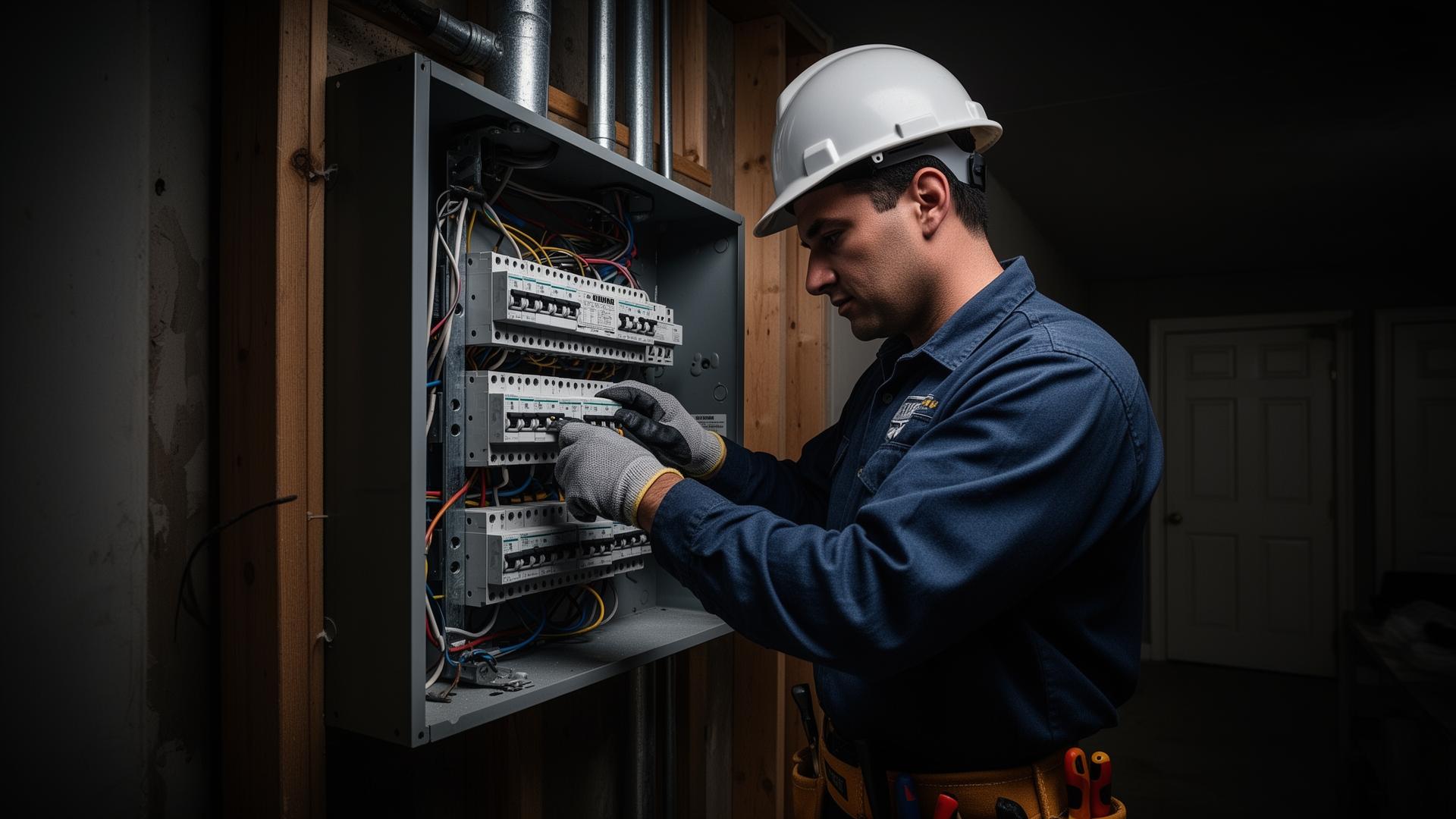
1. The Real Cost of Invisible Organic in Electrical Work
Atripped breaker during a home inspection, an arc-fault fault throwing sparks behind a bedroom wall, a whole-house outage the night before Thanksgiving — these scenarios send homeowners to Google with urgency that few other trades experience. The search doesn't happen during business hours on a desktop. It happens at 11 p.m. on a phone, with the query "emergency electrician near me" typed one-handed while the other hand holds a flashlight. The contractor who appears in position one of the Google Local Pack at that moment captures a call worth anywhere from $300 for a simple breaker reset to $12,000+ for an emergency panel swap and rewire.
One organic emergency call closing as a $500 breaker reset or a $9,000 panel upgrade pays for 8–15 months of SEO — zero per-click cost after rankings stabilize. That math is what separates electrician SEO from every other marketing channel available to contractors. Google Ads charges $30–$80 per click for "emergency electrician" in competitive metros, and the moment you stop paying, the leads stop. Organic rankings, once earned, compound.
But emergency calls are only part of the picture. Electrical contractors also compete for planned-project revenue: 200-amp panel upgrades required before home sales close, EV charger installations driven by new vehicle purchases, whole-home generator installs ahead of hurricane season, and lighting retrofits for energy efficiency. Each of these services has its own keyword ecosystem, its own seasonal demand curve, and its own conversion psychology. A homeowner researching "Level 2 EV charger installation cost" is in a fundamentally different headspace than someone searching "breaker keeps tripping at night" — and your SEO strategy needs to address both with equal depth. For a deeper dive, read our guide on how SEO helps electricians grow their business.
The Panel-Upgrade Math
Consider a typical scenario: an electrician in a mid-size market ranks organically for "200 amp panel upgrade [city]" and "electrical panel replacement near me." Combined monthly search volume across variations: 300–600. At an 18% organic click-through rate for position one, that's 54–108 visits per month. With a conservative 8% visitor-to-lead conversion rate and a 40% close rate on qualified panel-upgrade leads, that single keyword cluster generates 1.7–3.5 booked panel upgrades per month — at $3,000–$4,500 per job, that's $5,100–$15,750 in monthly revenue from one cluster of organic keywords. No ad spend. No per-click cost. No lead-gen middleman taking a cut.
Now multiply that across your full service menu: EV charger installs ($1,500–$3,000), whole-home generator installations ($8,000–$15,000), whole-house rewires ($8,000–$20,000+), and the steady flow of $200–$800 service calls for outlet replacements, GFCI installations, ceiling fan wiring, and circuit troubleshooting. The revenue potential of electrician SEO isn't theoretical — it's arithmetic.
2. Why Electrical Search Is a Different High-Stakes Game
Every trade has urgent searches. Plumbers get "burst pipe" calls; HVAC companies get "AC not working in August." But electrical search behavior is uniquely compressed, uniquely dangerous, and uniquely volatile in ticket size — three characteristics that demand a fundamentally different SEO approach.
The Urgency Timeline
A homeowner in total darkness at 2 a.m. isn't comparing three quotes — they're calling the first number that says "available now." The decision window from search to call is measured in seconds, not days. This means your meta title, your star rating, your "open now" badge, and your review count need to close the deal before the searcher ever visits your website. For emergency electrical queries, the search results page is the landing page.
Compare this to a planned panel upgrade, where the homeowner may research for 2–4 weeks, request 2–3 quotes, and read reviews across platforms. Or an EV charger installation, where the buyer often researches for months — starting before they even take delivery of the vehicle. Your SEO strategy must serve all three timelines simultaneously: immediate crisis (seconds), active troubleshooting (hours to days), and planned upgrades (weeks to months).
Ticket Volatility
Few trades span the revenue range that electrical work does. A single search session can result in a $150 outlet repair or a $15,000 whole-house rewire. That volatility means your keyword strategy can't treat all pages equally. High-ticket service pages (panel upgrades, generators, rewires) deserve deeper content, more trust signals, and more aggressive link building than commodity service pages. Understanding which keywords map to which ticket sizes — and allocating SEO resources accordingly — is the core of effective electrician keyword strategy.
The Call-Dominant Path
In most industries, the conversion funnel goes: search → click → browse website → fill out form → receive follow-up. For electricians — especially for emergency work — the funnel is: search → tap "Call" from the Local Pack. The website is bypassed entirely in 40–60% of emergency conversions. This reality means that Local Pack optimization isn't just important for electricians — it's often the single highest-ROI activity in the entire SEO campaign.
3. Local Pack & "Open Now" Reality for Electricians
The Google Local Pack — the map-based block showing three businesses at the top of local search results — isn't just another SERP feature for electricians. It's the primary conversion engine. Unlike organic listings below the fold, the Local Pack displays your phone number, star rating, hours, and "Directions" button directly in the results. For mobile users during an outage, tapping "Call" from the Pack is often the entire interaction. Our local SEO service is designed specifically around this behavior.
How "Open Now" Filtering Reshapes Click Distribution
One of the most underappreciated dynamics in electrician local SEO is time-of-day behavior. Google's "open now" filter — applied by default for many mobile users — removes businesses whose GBP hours show them as closed. At 2 a.m., this filter dramatically thins the competitive field. Electricians who list 24/7 availability (and actually answer) gain a massive advantage during off-hours, when call values tend to be highest. Audit patterns consistently show that extending GBP hours — even from "closes at 6 PM" to "closes at 10 PM" — can increase evening call volume by 30–50% in mid-size markets.
Conversely, daytime searches for planned work — "EV charger installation [city]," "electrical inspection near me" — follow more traditional click patterns. Users compare reviews, scan websites, and may contact multiple contractors. For these queries, your GBP description, service list, photos, and Q&A section all influence the decision, not just your position.
Market-Size Realities
In a metro like Los Angeles or Dallas-Fort Worth, dozens of well-optimized electricians compete for three Pack positions across overlapping service areas. The Pack reshuffles based on searcher proximity, making it possible (and necessary) to rank in the Pack across multiple zip codes rather than just your physical location. This requires a multi-location GBP strategy, robust geo-targeted service-area pages, and deep citation profiles across each target area.
In mid-size markets — Boise, Knoxville, Greenville — competition is less dense, but the contractors who invest early in local SEO create durable advantages that late entrants struggle to overcome. A 200-review GBP profile with three years of posting history and 50+ consistent citations is not something a competitor can replicate in 90 days. See how the best electrician SEO companies approach market analysis.
Regional regulatory factors also influence search behavior. In jurisdictions with notoriously slow permitting — parts of California, New York City, older Northeast municipalities — searches like "electrician who handles permits in [city]" carry significant conversion value because they signal a homeowner who understands the process and is ready to hire.
Find Out Where You Rank in Your Local Pack
We'll pull your current Pack positions across your service area's top 25 keywords and show you exactly where the gaps are.
4. Mapping Homeowner Urgency → Keyword & Page Strategy
Keyword research for electrical contractors isn't a one-dimensional exercise in finding the highest-volume terms. The real value lies in understanding the relationship between search intent, urgency level, and average job revenue — then building a content architecture that captures each segment. Tools like Ahrefs and Semrush provide the volume and difficulty data, but interpreting that data through an electrician-specific lens is where real strategy begins.
Audit patterns across dozens of electrician websites reveal a consistent gap: most contractors optimize (if at all) for a handful of obvious terms — "electrician [city]," "electrical repair near me" — while ignoring the long-tail, service-specific, and brand-model queries that often convert at two to three times the rate. For a comprehensive list, see our article on the best electrician SEO keywords.
Stage 1: Immediate Crisis Keywords
These searches happen in real-time, often from a dark room or a house with a burning-smell concern. Intent is at its absolute peak — the homeowner will call the first credible result they see.
- "emergency electrician near me" — national volume 8,000–12,000/month, but hyper-local intent means your city-level volume is what matters
- "no power in house but neighbors have power" — a diagnostic query that often leads to a $200–$500 service call and potential panel work
- "electrical fire smell in wall" — low volume, extreme urgency, very high job value
- "breaker keeps tripping won't reset" — high volume, converts to both service calls and panel upgrade consultations
- "sparking outlet" / "outlet smoking" — safety-critical queries where response time determines who gets the call
Stage 2: Troubleshooting & Diagnostic Keywords
These searchers have a problem but aren't yet sure they need a professional. Content that helps them diagnose the issue — while making clear when DIY stops and a licensed electrician starts — captures the lead at the research stage.
- "lights flickering in one room" — often indicates a loose connection or failing breaker; blog content performs well
- "GFCI outlet won't reset" — common in kitchens and bathrooms; solution page + local CTA converts at high rates
- "buzzing sound from breaker box" — signals loose wiring or overloaded circuit; high conversion to inspection bookings
- "half of house lost power" — usually a tripped main or lost leg; educational content ranks well and drives calls
- "why does my electricity bill keep going up" — energy-audit lead magnet opportunity
📝 Sample Blog Intro: "Why Is My Breaker Tripping Every Night?"
"If the same breaker trips every evening when you run the microwave and the dishwasher simultaneously, you're likely dealing with a circuit overload — not a faulty breaker. But if a breaker trips repeatedly on a circuit with no heavy loads, the cause may be more serious: a failing AFCI breaker (required in bedrooms under the NEC), a ground fault from damaged insulation, or — in older homes — a connection degraded by decades of thermal cycling. Here's how to tell the difference, and when to call a licensed electrician…"
This intro demonstrates expertise (AFCI knowledge, NEC reference), addresses the actual search intent, and naturally transitions to a service CTA.
Stage 3: Planned Upgrade & Installation Keywords
These are your highest-revenue keywords. The homeowner knows what they want — they're comparing contractors and costs.
- "200 amp panel upgrade cost" — consistently one of the highest-volume electrician keywords nationally; average job value $2,500–$4,500
- "EV charger installation [city]" — growing 40–60% year-over-year in most markets as EV adoption accelerates
- "whole house generator installation cost" — highly seasonal (spikes before hurricane/winter storm seasons); average job value $8,000–$15,000
- "whole house rewire cost" — often triggered by home purchase inspections; $8,000–$20,000+ jobs
- "add electrical outlet to garage" / "add 240v outlet" — smaller jobs but high volume and consistent year-round
📐 Sample Emergency Landing Page Wireframe: "No Power — Austin, TX"
Viewport (above fold): H1: "No Power in Your Home? Austin Emergency Electrician — On-Site in 60 Minutes." Giant click-to-call button. "Open Now" badge. License number. 4.9★ (312 reviews).
Trust strip: Licensed & insured · Background-checked technicians · Upfront pricing · Same-day service.
Quick-help section: "Before you call — check these 3 things: (1) Is your main breaker tripped? Here's how to check. (2) Is only half your house out? That's a lost leg — call us. (3) Are your neighbors out too? Call your utility at [number]."
Service scenarios: Total outage · Partial outage · Breaker won't reset · Burning smell · Sparking · Storm damage.
CTA repeat: "Call Now — [phone number]" + short form for less-urgent contacts.
FAQ snippet section: "How much does an emergency electrician cost?" / "What's your after-hours rate?" (schema-ready).
This page structure captures crisis-intent searchers with immediate trust signals while providing genuinely helpful diagnostic content that earns Google's confidence.
Stage 4: Brand and Model-Specific Long-Tails
These keywords are almost universally ignored by electricians — and they're some of the easiest to rank for because competition is so low. Each one signals a homeowner who has already identified their equipment and needs a pro familiar with it:
- "Square D QO breaker keeps tripping" — the homeowner has already identified the brand; they want an electrician familiar with their panel
- "Federal Pacific Stab-Lok panel replacement" — a known fire hazard; urgent, informed buyers with high intent
- "Tesla Wall Connector installation near me" — brand-driven, high-ticket, and growing rapidly
- "Generac generator service [city]" — captures both installation and annual maintenance leads
- "Siemens panel upgrade requirements" — technical query that a well-written service page can dominate
- "Eaton BR series breaker buzzing" — niche but zero competition; a single blog post can own this SERP
- "Leviton Decora switch not working" — DIY-adjacent but converts when content clarifies when a pro is needed
- "ChargePoint Home Flex installation requirements" — specific to the #2 residential EV charger; growing search volume
- "Generac error code 1505" — generator maintenance query; low volume but near-100% conversion when you're the only answer
- "Cutler-Hammer panel recall" — safety-driven, high urgency, often leads to full panel replacement
- "Lutron Caseta wiring help" — smart home integration query; positions you as tech-forward
- "GE panel upgrade to Square D" — brand-to-brand comparison; signals a homeowner ready to buy
Regional Intent Variations
Identical electrical problems generate different search behavior depending on geography, housing stock, and climate. Effective keyword strategy accounts for these regional patterns:
- Northeast: "aluminum wiring hazards Buffalo winter" / "knob and tube replacement Boston" / "Federal Pacific panel replacement New Jersey" — pre-1970s housing stock drives wiring remediation demand; cold-weather electrical failures spike December through March
- Sun Belt: "AC load tripping breaker Phoenix 110°F" / "pool electrical inspection Tampa" / "outdoor ceiling fan installation Houston" — heat-driven demand creates year-round service call volume tied to cooling loads
- Southeast / Gulf Coast: "generator install before hurricane season" / "whole home surge protection after storm" / "emergency electrician after power outage Jacksonville" — storm-driven urgency with 300–500% seasonal spikes
- Pacific Northwest: "EV charger installation Portland" / "heat pump electrical requirements Seattle" / "electrical panel upgrade for solar" — highest per-capita EV adoption and electrification demand in the country
- Mountain West: "high altitude generator sizing Denver" / "cold weather wiring Salt Lake City" / "snow melt system installation" — elevation and extreme cold create niche electrical needs most competitors ignore
Get Your Keyword Gap Analysis
We'll map every high-value keyword your competitors rank for that you don't — and show you exactly which pages to build first.
5. Seasonal Demand Calendar & Pre-Positioning Content
Electrical search demand follows predictable seasonal patterns — but most electricians publish content after demand spikes rather than before. Google needs 4–8 weeks to crawl, index, and rank new content. Publishing a generator installation guide in November means it won't rank until January — three months after peak demand. The contractors who win seasonal traffic are the ones who publish content 6–10 weeks before the spike begins.
Use Google Trends to validate timing in your specific market, and monitor Google Search Console impressions to catch early ramp-ups.
Climate Zone Breakdown
Northeast / Midwest (Space heater overloads, generator pre-winter)
- Oct–Dec peak: "space heater tripping breaker" / "portable generator hookup" / "snow blower dedicated circuit"
- Content timing: Publish generator sizing guides by Sept 1, AFCI breaker content by Oct 1, space heater circuit guides by Oct 15
- Infrastructure note: Pre-1970s homes with aluminum wiring face highest winter failure rates — target "aluminum wiring inspection" content for Sept–Oct
Southeast / Gulf Coast (Generators before hurricanes, surge protection after storms)
- May–Nov peak: "whole house generator installation" spikes 300–500% before hurricane season
- Content timing: Publish generator content by April 1, surge protection guides by May 1, storm-damage recovery pages by May 15
- Post-storm opportunity: "Surge protector for whole house after lightning" and "electrician after power outage" spike 48–72 hours after major storms
Southwest (EV charger summer demand, AC load panel checks)
- Apr–Sep peak: "AC tripping breaker" / "panel upgrade for AC" / "EV charger installation [city]"
- Content timing: Publish AC-load content by March 1, EV charger guides by Feb 15 (anticipating spring car purchases)
- Infrastructure note: Rapid new construction creates demand for "new build electrical inspection" and "smart home wiring" content
Mountain West (High-altitude generator sizing, cold-weather wiring)
- Sep–Feb peak: Generator sizing at altitude (de-rating), heated driveway installation, snow melt systems
- Content timing: Publish altitude-specific generator content by Aug 1, heated driveway guides by Aug 15
- Niche opportunity: "Generator de-rating at altitude" is a zero-competition keyword that demonstrates genuine expertise
Pacific Northwest (EV adoption surge, heat pump electrical prep)
- Year-round with spring peak: EV charger installations, heat pump electrical upgrades, solar tie-in work
- Content timing: Publish EV charger content quarterly (demand is steady), heat pump guides by Feb 1
- Market note: Highest per-capita EV adoption in the U.S. — "Level 2 charger installation Portland/Seattle" is fiercely competitive
90-Day Pre-Season Calendar Example
Here's a concrete example for a Northeast electrician preparing for winter demand:
Northeast: October–December Pre-Season Calendar
- Oct 1: Publish "Whole-Home Generator Sizing for Northeast Winters: A Homeowner's Guide" (2,000 words, permits, sizing calculator, brand comparison)
- Oct 15: Publish "AFCI Breaker Requirements: What Changed in the 2023 NEC" (1,500 words, bedroom circuits, kitchen updates)
- Nov 1: Publish "Space Heater Circuit Overload: Why Your Breaker Trips and How to Fix It" (1,200 words, circuit capacity, dedicated outlet solutions)
- Nov 15: GBP posts: "Winter storm preparedness — generator installations available before Thanksgiving" + update hours to reflect extended availability
- Dec 1: Publish "Holiday Lighting Safety: Circuit Load Planning and GFCI Requirements" (1,000 words, outdoor GFCI, amp calculations)
- Dec 15: GBP posts: "Emergency electrical service available through the holidays — 24/7 response"
Market Case Studies
An Austin-area electrician published an EV charger content cluster (pillar + 5 spokes) in February 2025 — ahead of spring car-buying season. By summer 2026, that cluster was generating 2.7× more charger installation leads than the same period the previous year, with zero ad spend on those keywords. The content ranked for 47 keyword variations, including 12 that the contractor hadn't even targeted explicitly.
A Jacksonville contractor published storm-preparedness content (generator sizing, surge protection, post-outage inspection) in April 2025, six weeks before hurricane season. When a tropical storm hit in August, the site was already ranking for "emergency electrician after storm Jacksonville" and "generator installation Jacksonville FL." Call volume during the two-week post-storm period was 4× the baseline — all organic.
6. Emergency & Outage SEO Playbook
Emergency electrical work is the highest-margin segment of most residential electricians' revenue. A single after-hours call can generate $500–$1,500 in immediate service revenue, with a significant percentage converting into larger follow-up jobs (panel replacements, rewiring, surge protection installations). Yet most electrician websites treat emergency services as an afterthought — a bullet point on a general services page. Read our guide on essential electrician SEO services to see how emergency pages fit into a complete strategy.
Emergency Landing Page Anatomy
Emergency-intent searches deserve their own optimized pages, not a mention in a service list. The page structure should prioritize speed-to-call above all else:
- A headline that immediately confirms availability: "24/7 Emergency Electrician in [City] — Call Now"
- Click-to-call button as the dominant CTA — forms are secondary for urgent searchers
- Response time commitment: "On-site within 60 minutes in [service area]"
- List of emergency scenarios you handle: power outages, burning smells, sparking outlets, exposed wiring, tripped main breaker, storm damage
- Quick diagnostic help: "Before you call — here's how to check if your main breaker is tripped" (builds trust AND ranks for diagnostic queries)
- After-hours pricing transparency (or at least a framework: "After-hours service call fee + time and materials")
- Trust accelerators: license number, insurance, "background-checked technicians" if applicable
GBP Post Templates for Emergency Capture
Proactive GBP posts before and during weather events position you to capture surge demand. Here are ready-to-adapt templates:
Storm outage forecast: "⚡ Severe storm warning for [city/county] tonight. Our emergency electrical team is standing by 24/7 for power outages, breaker failures, and storm damage. Call [number] — average response time under 60 minutes."
Cold snap advisory: "🥶 Freezing temps this week in [city]. Space heaters overloading circuits is the #1 cause of electrical calls in winter. If your breaker keeps tripping, don't keep resetting — call us for a same-day circuit evaluation."
Burning smell alert: "🔥 Burning smell from an outlet or switch? Don't ignore it. This can indicate a failing connection, overloaded wire, or arc fault. Turn off the breaker and call [number] — immediate safety inspections available."
Post-storm follow-up: "After last week's storm, we've seen a spike in surge-related appliance damage. Even if your power came back fine, a whole-home surge protector prevents damage from the next event. Free estimates this week."
Holiday season: "🎄 Holiday lighting overloading your circuits? If breakers are tripping when you plug in outdoor lights, your circuits may be at capacity. We can add dedicated outdoor circuits — usually completed in one visit."
Post-Event Follow-Up Sequence
After servicing an area during a weather event or major outage, a follow-up text/email to recent customers in the affected zip codes captures secondary demand:
"Hi [Name], we serviced several homes in your area during last week's [storm/outage]. Power surges from outages can cause hidden damage to wiring and appliances that shows up days or weeks later — flickering lights, warm outlets, or appliances behaving erratically. If you notice anything unusual, we're offering complimentary post-storm electrical inspections this week for existing customers. Reply YES or call [number] to schedule."
7. Service Page Optimization Blueprint
A single "Services" page that bullet-points 15 services — panel upgrades, outlet installation, ceiling fans, EV chargers, generators, rewiring, lighting, inspections — cannot rank for any of those terms individually. Each service needs its own dedicated page with 800–1,500 words of unique, helpful content. See how we approach this with our electrician SEO service pages.
What Goes on a High-Performing Service Page
The homepage title should include your primary service keyword and city: "Licensed Electrician in Austin, TX — 24/7 Emergency & Panel Upgrades | ABC Electric." Each service page follows a similar structure:
- Title tag: "[Service] in [City], [State] | [Brand] — Licensed Electrical Contractor"
- H1: Service name + city, naturally phrased
- Process explanation: What the job involves, step-by-step (e.g., a 200-amp panel upgrade: assessment, permit, utility coordination, installation, inspection)
- Why it's needed: Not just "we do panel upgrades" — explain why a homeowner would need one (adding EV charger, old fuse box, home sale requirement, adding AC)
- Local context: Permit requirements in your jurisdiction, typical timelines, any code-specific notes (e.g., "In [county], panel upgrades require a separate meter inspection by the utility within 5 business days of completion")
- Before/after project photos: Real work, not stock images. Panel labels visible, wiring organized, meter base upgrades shown
- Pricing framework: Not necessarily exact prices, but ranges and factors that affect cost
- FAQ section: 4–6 questions with schema markup (covered in Section 16)
- Strong CTA: Click-to-call + short form, with service-specific messaging
Geo-Specific Code & Infrastructure Content
The content that separates a rankable service page from a generic one is local code and infrastructure knowledge woven into the copy. Mention the specific NEC edition your jurisdiction has adopted. Reference local utility requirements (some utilities require their own inspection for panel upgrades; others don't). Note regional infrastructure realities — "Many homes in [historic neighborhood] still have original knob-and-tube wiring that requires careful remediation under NEC Article 394."
8. Location Page Strategy That Actually Works
The classic mistake: 20 location pages that each contain 100 words and an embedded Google Map, with the only difference being the city name. Google treats these as thin/duplicate content. Effective location pages require genuinely local content.
What Makes a Location Page Legitimate
- Neighborhoods served: List specific neighborhoods, subdivisions, and landmarks — not just the city name
- Local code requirements: If the jurisdiction has adopted a newer NEC edition than surrounding areas, mention it. If permit processes differ, explain how
- Area-specific electrical infrastructure: "Many homes in [historic district] still have original 60-amp fuse boxes that require complete panel upgrades before modern appliances can be safely added"
- Local wiring issues: Northeast cities with extensive aluminum wiring in 1960s–1970s housing developments; Sun Belt areas with rapid construction and inconsistent code enforcement
- Permitting notes: "Electrical permits in [city] typically take 3–5 business days for residential panel upgrades, compared to 2–3 weeks in [neighboring city]. We handle all permitting as part of the project."
- Real reviews from that area: Embed or quote reviews specifically from customers in that service area
Get a Technical Audit of Your Electrician Website
We'll identify every CWV failure, missing schema, and conversion bottleneck — with prioritized fixes ranked by impact.
9. Technical Health for Electrician Sites
Technical SEO for electricians doesn't require exotic solutions — it requires getting the fundamentals right consistently. See our full technical SEO checklist for electricians for an actionable breakdown.
Core Web Vitals
Google's page experience signals — Largest Contentful Paint (LCP under 2.5s), Interaction to Next Paint (INP under 200ms), and Cumulative Layout Shift (CLS under 0.1) — are confirmed ranking factors. For electrician sites, the most common CWV failures come from unoptimized hero images, render-blocking third-party scripts (chat widgets, review widgets loading synchronously), and layout shifts caused by late-loading Google Maps embeds on service-area pages. Check yours with PageSpeed Insights.
Project Gallery Image Optimization
Electricians love showing their work — and they should. But before/after photo galleries of panel upgrades, wire pulls through finished walls, and meter base installations often use full-resolution images straight from a phone camera. A single gallery page with 20 uncompressed 4MB images creates an 80MB page load. Essential fixes:
- Convert all images to WebP format (40–60% smaller than JPEG at equal quality)
- Implement lazy loading — only load images as they scroll into the viewport
- Use responsive image sizing (srcset) so mobile users don't download desktop-sized images
- Add descriptive alt text: "200-amp Square D QO panel upgrade completed in [city] — before and after" ranks in Google Images
10. Mobile & Conversion Reality Check
Over 75% of electrical service searches happen on mobile — and during emergencies, that number approaches 95%. Your site must load fast and function flawlessly on a phone with a mediocre cellular connection. Google's Mobile-Friendly Test is a quick starting point.
Click-to-call buttons should be thumb-sized and above the fold on every page. Forms should be short (name, phone, brief description). The mobile experience isn't a responsive afterthought — it's the primary interface for your most valuable visitors. During an outage, a homeowner on their phone with 15% battery isn't scrolling through a portfolio — they need your phone number in under 3 seconds.
Conversion patterns differ by service type. Emergency pages convert through calls (80%+ of conversions). Planned-upgrade pages convert through a mix of calls and forms (50/50 split). Blog/educational content converts through calls-to-action at the bottom of the article (2–5% conversion rate, but at scale this drives significant volume). Each page type needs its conversion mechanism designed for the specific user mindset.
11. Google Business Profile Mastery for Electricians
Your Google Business Profile is the single asset most directly responsible for Local Pack appearances. Optimization goes far beyond filling in your address and phone number.
Category & Service Configuration
Primary category: "Electrician." Secondary categories: "Electrical Installation Service," "Lighting Contractor," "Generator Installation Service," "Electric Vehicle Charging Station Contractor." Each secondary category tells Google about additional query types where your listing is relevant.
Service descriptions: Don't just list "Panel Upgrades." Write: "200-amp electrical panel upgrades for residential homes. Includes permit acquisition, utility coordination, and final inspection scheduling. Licensed for all major panel brands including Square D, Siemens, and Eaton." This content is indexed and influences ranking for service-specific queries.
Photo Strategy
Post photos weekly. Not stock images — real job photos. GBP listings with 100+ photos consistently outperform those with fewer than 10 in click-through rates. Prioritize these photo types:
- Panel label shots showing completed 200-amp upgrades (Square D, Siemens, Eaton brands visible)
- EV charger installations in garages — Tesla Wall Connector, ChargePoint Home Flex, Grizzl-E
- Subpanel additions in finished basements (clean, organized wiring)
- Whole-home surge protector installations at the main panel
- AFCI/GFCI breaker retrofits (especially in older panels)
- Generator installations with transfer switches visible
- Meter base upgrades and underground service feeds
- Commercial electrical room work and industrial panels
- Your branded van/truck at job sites
Q&A Pre-Population
Don't wait for random users to ask questions. Pre-populate the Q&A section with questions your actual customers ask — and answer each thoroughly:
- "Do you install Tesla Wall Connectors?" → "Yes, we're experienced with all major EV charger brands including Tesla Wall Connector, ChargePoint Home Flex, and Grizzl-E. We handle the full installation including any necessary panel upgrades and permitting."
- "What's your after-hours call-out fee?" → "Our after-hours emergency service fee is [amount], which covers the first 30 minutes of diagnostic work. Any additional work is quoted on-site before we proceed."
- "Are Federal Pacific panels dangerous?" → "Federal Pacific Stab-Lok panels have a documented history of breaker failure. We recommend replacement with a modern panel. We offer free assessments for FP panel owners."
- "Do you handle the electrical permit?" → "Yes, we handle all permitting and inspections as part of every project. In [city], residential permits typically take [X] business days."
- "Are your electricians background-checked?" → Answer with your policy
- "Do you offer financing for panel upgrades?" → Answer with your financing options
- "How long does a panel upgrade take?" → "Most residential panel upgrades are completed in one day. The overall project timeline — including permit and utility coordination — is typically 2–3 weeks."
- "Do you work on commercial properties?" → Answer with your commercial capabilities
12. Review & Reputation Engine
Review velocity (how many new reviews you earn per month) and review quality (star rating plus content depth) are top-three local ranking factors. For electricians, the review generation strategy works best when integrated into the job completion workflow.
Post-Job Text Sequence
Send a review request within 2 hours of job completion, while the relief of having power restored or the excitement of a new EV charger is fresh. Automated text messages with a direct Google review link convert at 2–4× the rate of email requests. Train technicians to mention the specific work when asking: "If you're happy with the panel upgrade, would you mind mentioning that in a Google review?" Reviews that reference specific services contain natural keywords that benefit SEO.
Review Response Templates
Respond to every review within 24–48 hours. Here are templates adapted for common electrician scenarios:
Panel upgrade review: "Thanks for the kind words about the 200-amp Square D upgrade, [Name]! Glad your home is now ready for the new EV charger. If you need anything else down the road — or when it's time to install that charger — we're a call away."
Emergency service review: "We know losing power at [time] is stressful, [Name]. Happy our team could get there quickly and get everything back online safely. Don't hesitate to call if you notice anything unusual going forward."
EV charger review: "Thanks, [Name]! Installing the Tesla Wall Connector was a smooth project — your garage had great access to the panel. Enjoy the home charging!"
Negative review: "We're sorry the experience didn't meet your expectations, [Name]. We take this seriously and would like to make it right. Please call us at [number] so we can discuss what happened and find a resolution."
How Does Your GBP Stack Up?
We'll benchmark your Google Business Profile against the top 3 electricians in your market — categories, photos, posts, reviews, and Q&A.
13. Citation & Directory Footprint
Citations — consistent mentions of your business name, address, and phone number across the web — remain a foundational local ranking signal. For electricians, the citation landscape includes both general directories and industry-specific platforms.
General directories (Yelp, BBB, Angi, HomeAdvisor, Thumbtack, Nextdoor) form the baseline. But electrician-specific sources carry additional relevance weight:
- NECA member listings
- State electrical licensing board directories
- Local utility contractor/approved installer lists
- EVITP certified installer databases
- QMerit installer directories for EV charger work
- IEC chapter member pages
NAP consistency is critical. An audit that reveals your business listed as "Smith Electric" on Google, "Smith Electric LLC" on Yelp, "Smith Electrical Services" on BBB, and "Smiths Electric" on Angi creates confusion signals that suppress local rankings. Every citation should use the exact same business name, address format, and phone number. Tools like BrightLocal can audit your citation consistency.
14. Link Earning in the Electrical Ecosystem
Backlinks remain one of Google's strongest ranking signals. For electricians competing in local search, link building isn't about acquiring thousands of links from random websites. It's about earning relevant, authoritative links that signal to Google your electrical company is a trusted, established business. Read our full guide on link building strategies for electricians.
Electrician-Specific Link Sources
- NECA and IEC chapter pages: Member profiles on the National Electrical Contractors Association or Independent Electrical Contractors are high-authority, highly relevant backlinks.
- Local utility contractor lists: Many utilities maintain lists of approved contractors for EV charger installations, energy efficiency upgrades, and demand-response programs.
- EVITP and QMerit directories: Certified installer directories that also drive direct referral traffic from homeowners searching for qualified EV charger installers.
- Manufacturer dealer/installer pages: Generac, Tesla (Certified Installer), Kohler, Eaton — installer-locator pages carry high domain authority.
- Utility rebate program pages: When your local utility offers EV charger rebates or energy-efficiency incentives, getting listed as a recommended installer earns a powerful local + industry link.
- Local chamber of commerce: Directory listing with backlink, plus additional links from sponsorship of chamber events.
Digital PR for Electricians
Creating newsworthy content earns links from local and regional media. Electrician-specific angles include seasonal electrical safety advisories (storm preparation, holiday lighting safety, space heater hazards), local code-change explainers (new AFCI requirements, updated EV charger provisions per the NEC), and data-driven content (analyzing electrical permit data by neighborhood, tracking EV charger installation growth in your market). Habitat for Humanity builds are a natural fit for electricians and often result in links from local news coverage.
15. Content Engine: Building Topical Depth Season by Season
Content marketing for electricians isn't about churning out weekly blog posts for the sake of "freshness." It's about building a comprehensive content architecture that establishes your site as the most authoritative resource for electrical services in your market.
The EV Charger Content Cluster
Pillar: "EV Charger Installation in [City]" (service page, 1,500–2,000 words)
- Spoke: "Level 1 vs. Level 2 EV Charger: Which Do You Need?" (blog post)
- Spoke: "EV Charger Installation Cost in [State]: 2026 Guide" (blog post with regional pricing)
- Spoke: "Do I Need a Panel Upgrade for an EV Charger?" (FAQ/blog — cross-links to panel upgrade pillar)
- Spoke: "EV Charger Permitting Requirements in [City/County]" (hyper-local content)
- Spoke: "Utility Rebates for EV Charger Installation in [State]" (high-value, low-competition)
- Spoke: "Tesla Wall Connector vs. ChargePoint Home Flex vs. Grizzl-E: Electrician's Comparison" (brand-capture)
The Panel Upgrade Content Cluster
Pillar: "Electrical Panel Upgrade in [City]: Cost, Process, and What to Expect"
- Spoke: "100-Amp to 200-Amp Panel Upgrade: When You Need It and What It Costs"
- Spoke: "Subpanel vs. Main Panel Upgrade: Which Is Right for Your Home?"
- Spoke: "Federal Pacific Panel Replacement: Why It's Urgent and What to Expect"
- Spoke: "Zinsco Panel Replacement: Risks, Costs, and Insurance Implications"
- Spoke: "Do I Need a Panel Upgrade for [EV Charger / Hot Tub / AC Unit]?"
- Spoke: "Electrical Panel Upgrade Permitting in [City/County]"
- Spoke: "How Long Does a Panel Upgrade Take? Timeline From Permit to Final Inspection"
The Whole-Home Generator Cluster
Pillar: "Whole-Home Generator Installation in [City]: Complete Guide"
- Spoke: "Generator Sizing for Northeast Winters: How to Calculate Your Home's Needs"
- Spoke: "Automatic Transfer Switch Types: What Your Electrician Should Know"
- Spoke: "Generator Installation Permitting in [City]: Requirements and Timeline"
- Spoke: "Natural Gas vs. Propane Generators: Fuel Line Safety and Considerations"
- Spoke: "Generator Noise Ordinances in [City]: Placement and Decibel Limits"
- Spoke: "Generator Rebate Programs in [State]: Current Incentives"
- Spoke: "Generac vs. Kohler vs. Briggs: Electrician's Brand Comparison"
- Spoke: "Annual Generator Maintenance: What to Expect and Why It Matters"
Video Content That Ranks on YouTube
YouTube is the second-largest search engine, and electrician-related video searches are growing rapidly. These YouTube search queries represent content opportunities with low competition:
- "Square D panel buzzing sound — is it dangerous?"
- "Federal Pacific panel replacement time-lapse"
- "Tesla Wall Connector install step-by-step"
- "Arc-fault breaker tripping explanation"
- "200 amp panel upgrade — what to expect"
- "GFCI vs AFCI breaker — what's the difference?"
- "Whole house surge protector installation"
- "Aluminum wiring — is my house safe?"
- "EV charger installation — garage wiring walkthrough"
- "Generator transfer switch — how it works"
- "Knob and tube wiring — should I be worried?"
- "How to tell if your electrical panel needs replacing"
Publishing two deeply researched, genuinely helpful articles per month that answer real homeowner questions with electrician-level expertise outperforms publishing eight thin posts. Depth matters. A 1,800-word guide on "EV Charger Installation Cost in Texas" that covers Level 1 vs. Level 2, panel capacity, permitting, utility rebates, and brand comparisons will outrank a 400-word page that says "Contact us for EV charger installation" every time.
16. Schema & Rich Results for Electrical Visibility
Structured data helps Google understand your content and can earn rich results — enhanced SERP appearances with stars, FAQ dropdowns, pricing, and more. Implementing schema correctly puts you ahead of 80%+ of competitor electrician sites that use no structured data at all.
Essential Schema Types for Electricians
- LocalBusiness (type: "Electrician"): Your primary business schema — name, address, phone, hours, service area, geo coordinates. Every page should include this.
- Service schema: Individual schema markup for each service offering — panel upgrades, EV charger installation, generator installation, rewiring. Include service descriptions, service area, and price ranges where appropriate.
- FAQPage: On every service page with Q&A content. FAQ rich results display directly in SERPs, dramatically increasing click-through rates.
- AggregateRating: Display your star rating and review count in search results. Requires verified, schema-compliant review data.
- BreadcrumbList: Helps Google understand your site structure and displays breadcrumb navigation in search results.
- HowTo schema: For process-oriented content (how a panel upgrade works, what to expect during an EV charger installation). Can earn step-by-step rich results.
Validate your markup with Google's Rich Results Test and monitor for errors in Search Console.
17. Analytics & Revenue Attribution Setup
For electricians, where jobs range from $150 to $15,000+, knowing which keywords and pages drive which types of leads isn't optional — it's the foundation for every resource-allocation decision. Without proper attribution, you're guessing.
Call Tracking Is Non-Negotiable
Since 40–60% of electrician conversions happen via phone call rather than form submission, call tracking is essential. Dynamic number insertion (DNI) assigns unique tracking numbers to different traffic sources — organic, paid, direct, referral — so you can attribute each call to the channel and even the keyword that drove it. This is especially critical for emergency calls, where the entire conversion happens on the phone without any website interaction.
What to Track
- Organic calls by landing page: Which pages drive the most phone calls? A panel upgrade page generating 15 calls/month at $3,500 average job value = $52,500/month in attributed revenue.
- Form submissions by source: Track which pages generate form fills, and follow through to closed revenue.
- GBP interactions: Calls from listing, direction requests, website clicks — all tracked in GBP Insights and correlatable to ranking changes.
- Emergency vs. planned split: Segment leads by urgency to understand which SEO activities drive which revenue type.
- Cost per organic lead: Monthly SEO investment ÷ total organic leads = your true cost per lead. Compare to PPC cost per lead ($80–$200+ for electrician keywords) to quantify ROI.
Ready to See Your Organic Revenue Potential?
Free consultation includes a keyword landscape analysis, competitive benchmark, and projected organic lead volume for your market.
18. The Compounding Authority Flywheel for Electricians
SEO for electricians isn't a one-time project — it's a compounding asset. Here's how the flywheel works once it's in motion:
Month 1–3: Technical foundation, GBP optimization, citation cleanup, initial service pages. Rankings begin to move for low-competition long-tail keywords. First organic leads trickle in.
Month 4–6: Content clusters gaining traction. Review velocity increasing. Local Pack positions improving. Lead volume grows noticeably — enough to measure ROI against ad spend.
Month 7–12: Topical authority established. High-value keywords (panel upgrades, EV chargers, emergency) entering page one. Organic leads becoming a reliable revenue channel. Cost per organic lead dropping month over month.
Month 12–24: Dominant positions locked in. Competitors would need 12–18 months of aggressive investment to displace you. Every new piece of content benefits from the authority your site has already built. New service lines (generator installations, solar tie-ins) rank faster because Google already trusts your domain for electrical topics.
The contractors who start now build positions that late entrants struggle to overcome. A 200-review GBP profile with three years of posting history, 80+ citations, and 40+ deep content pages isn't something a competitor can replicate in 90 days. That's the moat.
19. What Professional Electrician SEO Looks Like in 2026–2027
Three developments are reshaping how electricians need to approach search visibility:
AI Overviews & Zero-Click Search
Google's AI Overviews are increasingly synthesizing answers to informational queries — "how much does a panel upgrade cost" may get answered directly in the SERP. This makes it more critical than ever to own the transactional and local-intent queries where AI can't replace a phone call. Your SEO strategy should prioritize keywords that require a local service provider (which AI Overviews can't fulfill) while using informational content to build the topical authority that feeds those transactional rankings.
Voice Search for Emergencies
"Hey Google, find an emergency electrician open now" is growing as a search modality. Voice search typically returns only the #1 result — making Local Pack position one even more critical for emergency queries. Natural language optimization, structured data, and GBP hours configuration all influence voice results.
Video as a Ranking Factor
Google increasingly surfaces YouTube videos in search results for electrical queries. "Arc-fault breaker tripping" shows YouTube results before many organic listings. Electricians who create authentic job-site video content — panel upgrades, EV charger installs, breaker troubleshooting — gain visibility in a format most competitors ignore entirely.
Electrification Trends
Three macro trends are expanding the electrical keyword universe: EV adoption accelerating charger installation demand at 40–60% annually, aging residential infrastructure (60%+ of U.S. homes built before 1980) driving panel upgrade and rewiring demand, and the electrification movement — heat pumps replacing gas furnaces, induction replacing gas stoves, solar and battery storage expanding the scope of residential electrical work. Electricians who build search authority now will hold dominant positions as demand fully matures.
20. Frequently Asked Questions & Key Takeaways
Key Takeaways Checklist
- One organic emergency call can pay for 8–15 months of SEO — the ROI math is asymmetric in your favor
- Emergency searches compress the buyer journey into seconds — Local Pack position and "open now" status determine who gets the call
- Brand/model keywords (Square D, Federal Pacific, Tesla Wall Connector, Generac) are low competition and high conversion
- Publish seasonal content 6–10 weeks before demand spikes — not after
- Each service needs its own page — a single "Services" page ranking for nothing is the most common electrician SEO mistake
- GBP optimization (categories, photos, Q&A, posts, hours) drives more emergency calls than any on-site SEO activity
- Call tracking is non-negotiable — 40–60% of electrician conversions happen via phone
- SEO is a compounding asset — early movers build positions that late entrants can't replicate in 90 days
Why ElectricianSEO.co Exists — and Who It's For
This agency was built on a simple observation: electrical contractors face a completely different search landscape than plumbers, roofers, or HVAC companies — yet most SEO agencies apply the same template to all of them. The keyword patterns, trust signals (licensing, EVITP, NABCEP), and seasonal demand curves are all electrician-specific. We work exclusively with electrical contractors. Every keyword library, content template, and competitive benchmark is built for this industry. Learn more about our team.
Electrician-Only Client Base
No plumbers, no roofers, no HVAC companies. Every strategy is built for electrician-specific keywords, search patterns, and competitive dynamics.
Lead Attribution Reporting
Monthly reports track organic calls, form submissions, and cost-per-lead — not vanity metrics. You see exactly which keywords drive which jobs.
Industry-Native Team
Our specialists understand the difference between a subpanel and a main lug, why a Federal Pacific replacement is urgent, and how to write content that resonates with homeowners facing electrical decisions.
Pre-Built Competitive Intelligence
We've mapped the keyword landscape, citation sources, and competitive dynamics of the electrician vertical. You benefit from day one — no ramp-up period.
Emergency Query Specialization
After-hours, high-urgency searches require specific GBP strategies, page structures, and content approaches. We've refined these through dozens of campaigns.
Month-to-Month After Onboarding
Results earn retention. After the initial onboarding period, engagement continues month-to-month based on performance.
One Electrician Per Market
To protect competitive interests, we limit engagement to one electrical contractor per geographic market. When we're building your keyword strategy and content, we're not simultaneously doing the same for your competitor across town. That exclusivity is non-negotiable. Check market availability →